
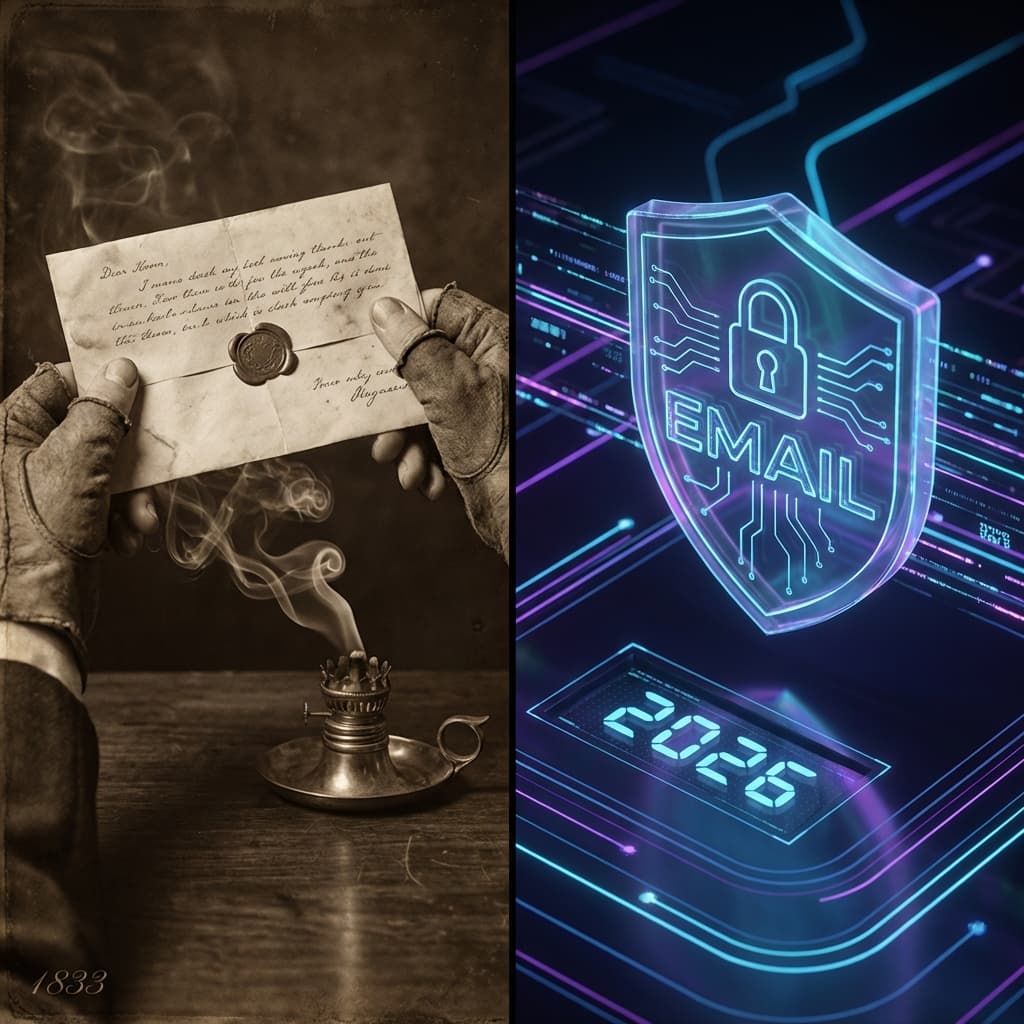
📜 History Lesson: From vinegar-dipped letters in 1833 to AI-shielded inboxes in 2026, the history of sanitizing mail reveals one timeless truth: never trust an incoming message until it's verified.
- 🔹 Era: 1833 Cholera Epidemic vs 2026 AI Era
- 🔹 Concept: Mail Sanitization & Fumigation
- 🔹 Lesson: "Clean outside, dirty inside"
- 🔹 Solution: etempmail.org
From Vinegar to Virtual Shields: The History of Sanitizing Mail (1833 to 2026)
In the digital age of 2026, we worry about "viruses" arriving in our inbox via AI-driven phishing and malware. But nearly two centuries ago, the fear was much more literal. During the devastating cholera epidemics of the 19th century, opening a letter wasn't just annoying—it was considered potentially deadly.
Just as etempmail.orgacts as a "Generation 3" barrier between your personal data and digital threats today, postal services in 1833 used physical methods to "sanitize" correspondence. From slitting letters with razors to dipping them in vinegar, the history of mail disinfection teaches us a valuable lesson: never trust an incoming message until it has been purified.
The 1833 Havana Letter: A Case Study in Panic
One of the most famous examples of disinfected mail dates back to 1833, during a severe cholera outbreak in Havana, Cuba. Historical records identify a letter sent by D. Ignacio Pérez de Soto in Havana to D. Fernando Antonio de Alvear in Madrid.
At that time, medical experts believed paper could carry the "miasma" or contagion of cholera. To protect the recipient in Spain, the letter underwent a rigorous disinfection process before entering the country.
How Did They "Sanitize" Mail in 1833?
The process was invasive and destructive, designed to kill invisible enemies:
- The Slits (Rastel): Health officers would use a razor or chisel to cut slits into the folded letter. This allowed disinfecting fumes to penetrate the paper without breaking the wax seal.
- Fumigation:Letters were exposed to sulfur smoke or dipped in vinegar using iron tongs so postal workers wouldn't have to touch them.
- The Markings: Some disinfected mail bore the Italian stamp "Netta fuori e porca dentro,"translating to "Clean outside and dirty inside".
This creates a striking parallel to modern cybersecurity: an email might look "clean" on the outside (valid sender, nice logo), but be "dirty" on the inside (malicious tracking pixels or ransomware).
2026: The New "Cholera" is AI Phishing
Fast forward to 2026. We no longer dip tablets in vinegar, but the need to sanitize communication is greater than ever. The modern threat isn't bacteria; it is The Automation Paradox.
Attackers now use AI to speed up campaigns, shrinking the time between a phishing email landing in your inbox and a full account compromise to less than one hour. Security experts predict that by 2026, AI-enhanced phishing will be nearly indistinguishable from legitimate emails.
Disposable Email: Your Digital "Fumigation" Chamber
Just as 19th-century health boards set up "Lazarettos" (quarantine stations) to hold mail, a Generation 3 Disposable Email Address (DEA) acts as a quarantine zone for your digital life.
Using etempmail.org offers the modern equivalent of those 1833 safety measures:
Isolation
When you sign up for a new service, you provide a disposable address. If that address gets spammed or compromised, your real inbox remains untouched.
Gen-3 Protection
Unlike old "10-minute" emails, modern services allow you to keep an address active for days or months for verification codes.
No "Slits" Required
Unlike the damaged letters of 1833, our technology delivers your content instantly and intact, filtering out the "digital miasma".
Frequently Asked Questions (FAQs)
Conclusion
History repeats itself. In 1833, people feared a letter from a stranger could bring sickness. In 2026, we fear an email from a stranger can bring identity theft.
The technology has changed, but the solution remains the same: Sanitize before you trust.
Generate Your Sanitized Email Address Now